Hurricane Roof Damage: What to Do Immediately After the Storm
Hurricane Roof Damage: What to Do Immediately After the Storm
For homeowners in Carteret, Craven, Onslow, Pender, Brunswick, and New Hanover counties
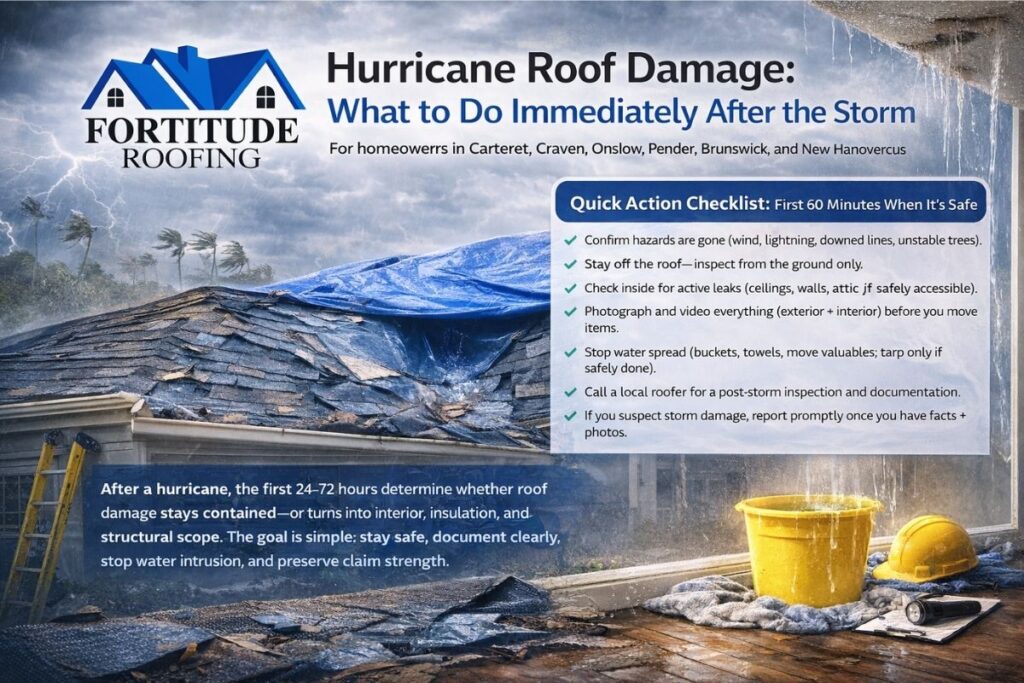
After a hurricane, the first 24–72 hours determine whether roof damage stays contained—or turns into interior, insulation, and structural scope. The goal is simple: stay safe, document clearly, stop water intrusion, and preserve claim strength.
Quick Action Checklist: First 60 Minutes When It’s Safe
- Confirm hazards are gone (wind, lightning, downed lines, unstable trees).
- Stay off the roof—inspect from the ground only.
- Check inside for active leaks (ceilings, walls, attic if safely accessible).
- Photograph and video everything (exterior + interior) before you move items.
- Stop water spread (buckets, towels, move valuables; tarp only if safely done).
- Call a local roofer for a post-storm inspection and documentation.
- If you suspect storm damage, report promptly once you have facts + photos.
Step-by-Step: What to Do After Hurricane Roof Damage
Step 1: Prioritize safety
Before inspecting anything:
- wait until conditions are safe
- avoid climbing on the roof
- watch for downed power lines and unstable debris
- keep children and pets away from exterior hazards
Roof damage is not worth a fall, electrocution risk, or injury.
Step 2: Look for obvious signs of damage (ground-level + interior)
From the ground, note:
- missing, lifted, creased, or flapping shingles
- debris impacts (branches, punctures)
- damaged flashing, vents, ridge components
- sagging rooflines or uneven ridges
- gutters pulled away or dented components
Inside the home, check:
- ceiling/wall stains (especially after rain bands)
- attic moisture, damp insulation, darkened decking (only if safe)
- musty odor near upper floors
- bubbling paint or drywall seam separation
Avoid disturbing damaged areas unnecessarily—preserve evidence.
Step 3: Document everything (this protects your claim)
Documentation is leverage. Best practice:
- take wide + close-up photos from multiple angles
- video slow pans of each elevation and any interior damage
- capture collateral impacts (dented gutters, damaged vents, fallen debris)
- note the storm date/time window and when you first noticed damage
- keep a simple log: “what happened / what we observed / what we did”
If you perform temporary mitigation, photograph before and after.
Step 4: Prevent further damage (only if safe)
Your goal is to reduce ongoing loss without destroying evidence.
Safe temporary mitigation can include:
- catch leaks with containers and towels
- move furniture/valuables out of drip paths
- place plastic sheeting under attic drips if accessible and safe
- tarp exposed areas only if it can be done safely and correctly (many homeowners should not do this themselves)
Avoid permanent repairs until inspection and documentation are complete.
Keep receipts for emergency mitigation materials and services.
Step 5: Schedule a professional roof inspection (critical before the adjuster)
Hurricane damage is often uneven: one slope may be fine while edges, ridges, and penetrations fail.
A decision-grade inspection should include:
- on-roof evaluation of all slopes, edges, transitions, penetrations
- interior/attic review when safely accessible
- moisture-path diagnosis (where water is traveling)
- photo documentation and written findings
- preliminary repair vs replacement assessment
This improves accuracy and reduces under-scoping.
Step 6: Contact your insurance carrier (facts only)
Once damage is confirmed and documented:
- file the claim and obtain a claim number
- provide photos/video and dates
- describe what you observed, not what you assume caused it
- disclose any temporary mitigation performed
Avoid speculation. Claims are decided on timing + evidence + policy language.
Common Post-Storm Mistakes That Cost Homeowners
Avoid these:
- climbing onto the roof to “check quickly”
- waiting days/weeks to document (attribution becomes harder)
- making permanent repairs before inspection (evidence disappears)
- discarding damaged materials before documenting
- signing high-pressure contracts or “free roof” pitches
- letting the adjuster inspect without your documentation and contractor present (when feasible)
The best outcomes come from calm, procedural action—not speed without structure.
Why Hurricane Roof Damage Is Different in North Carolina
Hurricanes combine:
- wind uplift (breaks seals, lifts edges, damages ridges)
- wind-driven rain (water moves sideways/upward)
- debris impacts (punctures and hidden cracks)
- prolonged exposure (multiple hours of stress, not a single event)
Damage may not leak immediately. Progressive failure is common if weak points are ignored.
FAQs: Hurricane Roof Damage
Should I tarp my roof after a hurricane?
Only if it can be done safely and correctly. Many homeowners should not climb roofs. A professional tarp can prevent interior damage while preserving evidence.
What should I document for an insurance claim?
Exterior and interior photos/video, the storm date/time window, when you noticed damage, and any temporary mitigation steps (with receipts).
Can my roof be damaged even if shingles aren’t missing?
Yes. Wind can break adhesive seals, damage flashings, and create hidden entry points without obvious missing shingles.
When should I call a roofer after a hurricane?
As soon as conditions are safe—especially if you have active leaks, visible damage, or neighbors reporting roof impacts.
Should I make permanent repairs immediately?
No. Use temporary mitigation to prevent further damage, then wait for inspection and documentation before permanent repairs.
Final Takeaway
After a hurricane, your priorities are safety, documentation, and controlled mitigation. These steps protect both the home and the homeowner’s financial position—and they reduce the chance that a manageable roof issue turns into full interior scope.
If you’re in Carteret, Craven, Onslow, Pender, Brunswick, or New Hanover counties, Fortitude Roofing can provide a post-storm inspection focused on clear findings, photo documentation, and a practical next-step plan—before decisions are made.