NCJUA vs Standard Insurance: What’s Different After a Storm
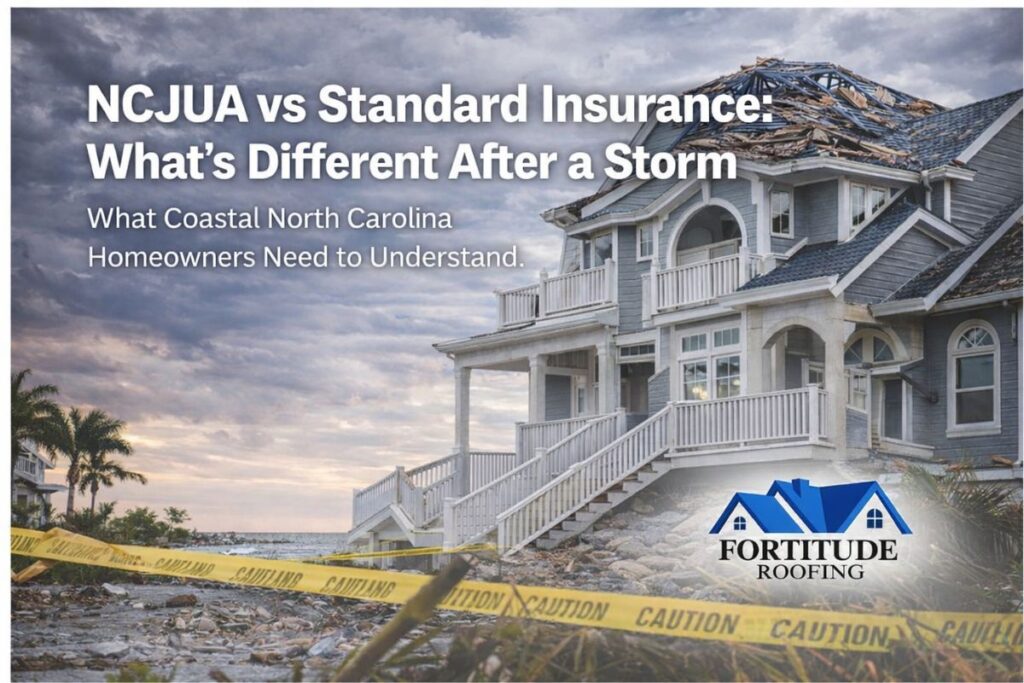
NCJUA vs Standard Insurance: What’s Different After a Storm
Roof insurance claims under NCJUA (North Carolina Joint Underwriting Association) or Beach Plan structures often work very differently than claims under standard homeowners insurance policies in North Carolina.
For many coastal homeowners, these differences become most apparent after a storm, when deductible structure, documentation requirements, and claim evaluation standards directly affect outcomes.
Quick Summary
In North Carolina, standard homeowners insurance typically includes wind coverage in the primary policy, while NCJUA or Beach Plan policies often separate wind and hail coverage with percentage-based deductibles. Beach Plan claims also require more detailed documentation and storm-specific evidence, and coverage decisions are based on cause of loss—not roof age alone.
How Standard Homeowners Insurance Typically Works
Under standard homeowners insurance:
- Wind coverage is usually bundled with the dwelling policy
- Deductibles are often fixed dollar amounts
- Claim processes are more familiar to most homeowners
- Documentation requirements may be less stringent for moderate storms
These policies are common inland and in lower-risk coastal zones.
How NCJUA / Beach Plan Coverage Is Different
Many coastal properties are insured through:
- NCJUA (Beach Plan)
- Coastal Property Insurance Pool
These policies are designed for higher-risk wind zones and introduce key differences.
Separate Wind and Hail Coverage
Wind and hail coverage is often separate from the main dwelling policy, with:
- Independent deductibles
- Separate claim handling procedures
Percentage-Based Deductibles
Wind or named-storm deductibles are frequently:
- Calculated as a percentage of the insured value of the home
- Often 1%–5%, which can significantly increase out-of-pocket cost
This can materially change whether a claim makes financial sense.
Documentation Sensitivity After a Storm
Beach Plan claims are often evaluated under higher scrutiny, especially in high-wind zones.
Common documentation expectations include:
- Clear storm-date narratives
- Slope-by-slope damage identification
- Evidence linking damage to a specific storm event
- Distinction between storm damage and pre-existing conditions
Subtle damage patterns that might be accepted under standard policies may require more disciplined documentation under NCJUA.
Cause-Based, Not Condition-Based Coverage
One common misunderstanding is that roof age alone determines coverage.
Under NCJUA and Beach Plan structures:
- Claims are evaluated based on cause of loss
- Age or wear does not automatically exclude coverage
- Damage must be tied to a covered storm event under policy terms
This makes accurate inspection and documentation critical.
Why Claim Economics Can Look Very Different
Between:
- Higher percentage-based deductibles
- Separate wind policies
- Tighter documentation standards
The same roof damage can lead to very different financial outcomes depending on whether the home is insured under NCJUA or a standard policy.
Understanding these differences early helps homeowners avoid misaligned expectations.
Coastal Insurance Claims Near You
Homeowners in Wilmington, Wrightsville Beach, Carolina Beach, Oak Island, Topsail Island, Emerald Isle, and other coastal communities frequently encounter NCJUA or Beach Plan claim structures.
Local experience matters when navigating:
- Wind zone exposure
- Policy structure differences
- Documentation requirements after storms
Frequently Asked Questions
What is NCJUA or the Beach Plan in North Carolina?
NCJUA is the state-backed insurer that provides wind and hail coverage for high-risk coastal properties that may not qualify for standard policies.
How are Beach Plan deductibles different?
They are often percentage-based and calculated from the home’s insured value, not a flat dollar amount.
Is it harder to file a claim with NCJUA?
Not harder, but more documentation-focused. Claims often require clearer storm linkage and detailed evidence.
Does roof age automatically deny Beach Plan claims?
No. Coverage decisions are based on cause of loss, not roof age alone.
Should I get an inspection before filing a Beach Plan claim?
Yes. Knowing whether storm-related damage exists helps determine whether the claim is worth pursuing given deductible exposure.
A professional roof inspection can help clarify storm-related damage before navigating NCJUA or Beach Plan claim requirements.