Code Requirements That Commonly Trigger Insurance Supplements
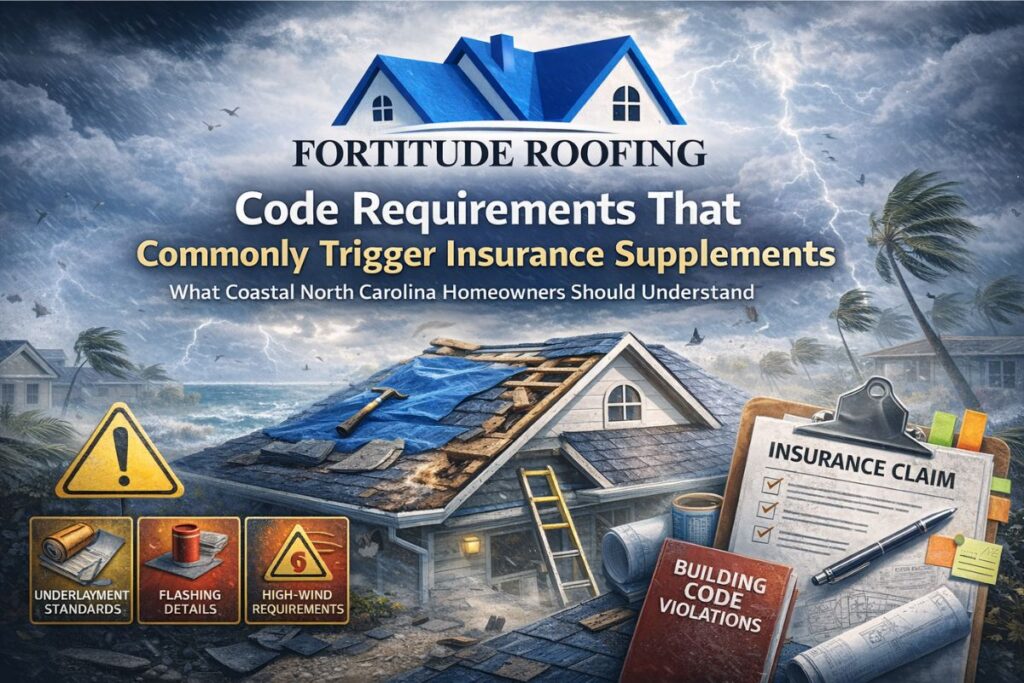
Code Requirements That Commonly Trigger Insurance Supplements
After storm damage, many homeowners are surprised when roof repair scopes change due to building code requirements. In coastal North Carolina, these requirements frequently influence what must be repaired or upgraded—especially when damage crosses certain thresholds.
When code applies, insurance supplements are not optional add-ons. They are how a repair scope is aligned with what is legally required for a compliant, long-term roof system.
Quick Summary
In coastal North Carolina, building code requirements such as underlayment coverage, ventilation corrections, flashing standards, and high-wind installation methods can trigger insurance supplements after storm damage. These items are often not included in initial insurance estimates but are required for compliant repairs.
Why Building Code Matters After Storm Damage
Roof repairs are not governed only by what was damaged—they are governed by current building code when repair thresholds are exceeded.
Key factors include:
- Percentage of roof area being repaired
- Age and construction of the existing roof
- Local wind and exposure classifications
- Updates to code since the original roof was installed
When thresholds are met, code upgrades become mandatory.
Code-Driven Items Commonly Missed in Initial Estimates
Insurance estimates are often prepared quickly and visually. As a result, code-required items are frequently omitted at first.
Underlayment Requirements
Modern codes often require enhanced underlayment coverage, especially in high-wind or coastal zones. Older roofs may not meet current standards.
Ventilation Corrections
If existing ventilation is inadequate or non-compliant, corrections may be required when roof work exceeds repair limits.
Flashing Details
Current codes specify flashing methods and materials that differ from older installations, particularly at:
- Roof-to-wall transitions
- Chimneys
- Valleys and penetrations
High-Wind Installation Standards
Fastener patterns, attachment methods, and edge detailing may need to be upgraded to meet current wind-resistance requirements.
Why These Items Often Appear as Supplements
Initial insurance estimates are typically based on:
- Visual inspection
- Assumed existing conditions
- Standard assemblies
Code requirements often only become clear after:
- Measurements are verified
- Tear-off exposes existing conditions
- Repair scope is defined against current regulations
Supplements are the mechanism used to bring the scope into compliance—not to inflate costs.
Coastal North Carolina: A Higher Code Threshold Environment
Homes in coastal and near-coastal NC face:
- Higher wind design pressures
- Stricter enforcement
- Greater insurer scrutiny
As a result, code-triggered supplements are common, not exceptional.
Ignoring code requirements creates risk:
- Failed inspections
- Reduced roof lifespan
- Denied future claims
- Liability for improper work
What Homeowners Should Expect
When code applies:
- Required upgrades are documented
- Scope adjustments are submitted to the insurer
- Repairs are brought up to compliant standards
This protects both the homeowner and the long-term performance of the roof.
Frequently Asked Questions
What is a code-required insurance supplement?
It’s an adjustment to the insurance scope to include items required by current building code that were not included in the initial estimate.
Why wasn’t code included in the first insurance estimate?
Initial estimates are often based on visual inspections and assumptions. Code requirements may only apply once repair thresholds are confirmed.
Do insurance companies have to pay for code upgrades?
It depends on the policy. Many policies include ordinance or law coverage, which applies when code upgrades are required.
Is a contractor allowed to skip code items to match the estimate?
No. Contractors are required to follow current building code, regardless of the initial insurance estimate.
Are code-related supplements common in coastal North Carolina?
Yes. Coastal exposure zones frequently trigger higher standards for roofing systems after storm damage.
A professional roof evaluation can help determine whether code requirements affect the scope of storm-related roof repairs.