How Coastal Exposure Affects Roof Material Choice
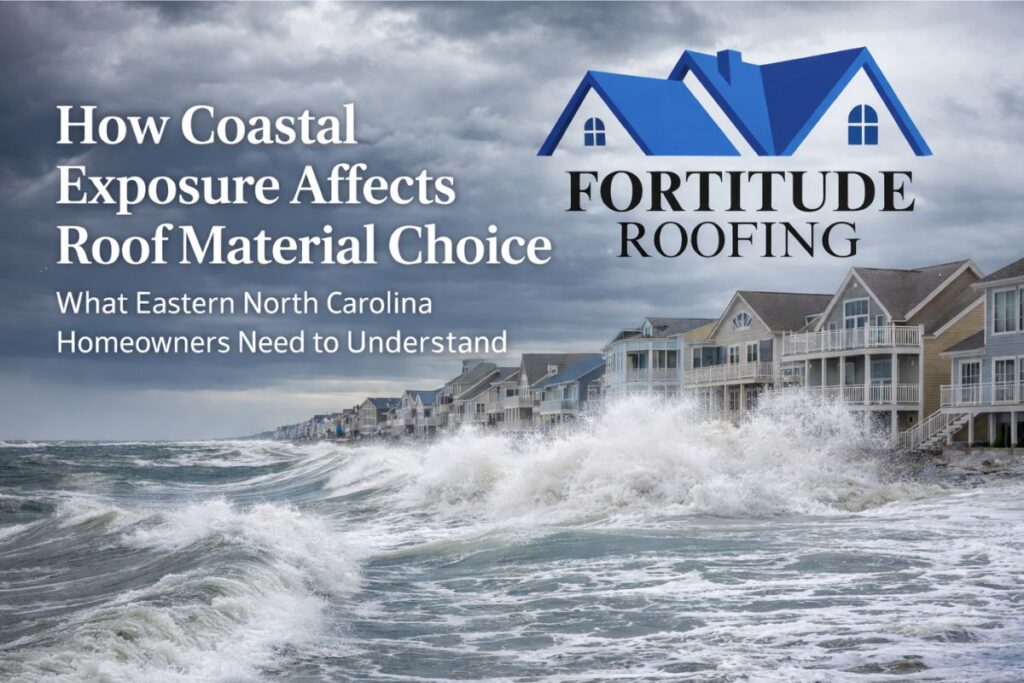
How Coastal Exposure Affects Roof Material Choice
Coastal and near-coastal homes in Eastern North Carolina operate under a different set of roofing stresses than inland properties. Homeowners in Wilmington, Morehead City, New Bern, Jacksonville, and surrounding coastal communities experience conditions that directly impact roof performance, longevity, and insurance outcomes.
Choosing the right roofing material matters—but in coastal exposure zones, system design and installation quality matter more.
Quick Summary
Coastal roofing performance is affected by wind-driven rain, repeated storm cycles, salt exposure, and higher insurance scrutiny. While material choice is important, roofs in coastal North Carolina must be engineered and installed to higher standards—especially for underlayment, flashing, fastening, and edge detailing—to manage long-term stress.
What Makes Coastal Roofing Different?
Roof systems near the coast face compounding stress, not just occasional severe weather.
Wind-Driven Rain
Coastal storms force water horizontally, not vertically. Roofing systems must manage:
- Water intrusion at seams and penetrations
- Backflow at transitions and roof-to-wall intersections
- Prolonged wetting during multi-day storm events
Repeated Storm Cycles
Even moderate storms cause cumulative damage. Over time, this leads to:
- Fastener fatigue
- Sealant breakdown
- Movement-related wear at seams and flashing
Roofs that barely meet minimum standards often fail early under repeated exposure.
Salt Air Exposure
Salt accelerates corrosion of:
- Fasteners
- Flashing
- Cut edges and terminations
Material compatibility and protective detailing become critical in coastal environments.
Insurance and Code Scrutiny
Coastal properties face:
- Stricter code enforcement
- Higher documentation requirements
- Greater insurer attention to wind ratings and installation methods
A roof that “passes inspection” may still underperform if it was not designed for actual exposure conditions.
Why Higher Standards Apply—Regardless of Material
In coastal exposure zones, every roofing material requires elevated execution.
Key system elements that matter most:
- Underlayment: Acts as the primary defense during wind-driven rain events
- Flashing: Must manage lateral water movement and pressure
- Fastening: Critical for wind uplift resistance
- Edge detailing: Roof perimeters experience the highest wind loads
Upgrading these elements often delivers more real-world performance benefit than simply upgrading surface materials.
Material Choice vs System Performance
Architectural shingles, standing seam metal, and other roofing systems can all perform well in coastal NC when properly designed and installed.
Common misconception:
“Stronger material automatically means better performance.”
Reality:
- A well-designed shingle system often outperforms a poorly executed metal roof
- A premium material installed to minimum standards still fails under coastal stress
System execution determines durability.
How to Evaluate Roofing Options Near the Coast
Homeowners in coastal and near-coastal North Carolina should evaluate:
- Distance from open water
- Wind exposure category
- Roof geometry and complexity
- Long-term ownership plans
- Budget aligned with lifecycle cost, not just install price
Material selection should follow exposure analysis—not marketing claims.
Coastal Roofing Requires Local Expertise
Roofing systems in coastal NC must be built to manage stress, not just satisfy minimum requirements. That requires:
- Local exposure knowledge
- Discipline in system design
- Zero tolerance for installation shortcuts
At Fortitude Roofing, roofing systems are designed around coastal realities, insurance expectations, and long-term performance—not generic material specs.
Roofing Near You in Eastern North Carolina
If you’re comparing roofing options for a coastal or near-coastal property, the most important question isn’t what material is best—it’s whether the system is designed for your exposure conditions.
A properly evaluated and executed roof will outperform a higher-priced system installed to minimum standards.