Hidden Roof Damage Discovered After Tear-Off
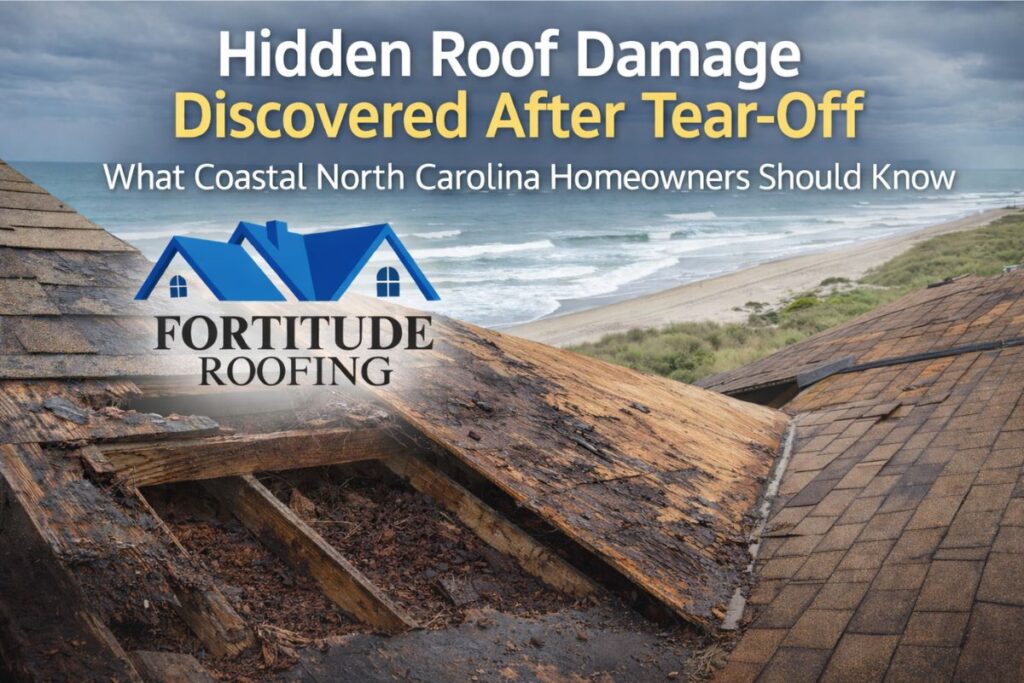
Hidden Roof Damage Discovered After Tear-Off
Some of the most important roof damage in coastal North Carolina is not visible until roofing materials are removed. Shingles can appear intact while serious underlying issues remain hidden beneath the surface.
In Wilmington and other coastal communities, this type of concealed damage is common due to wind-driven rain, repeated storm cycles, and prolonged moisture exposure.
Quick Summary
Hidden roof damage is often discovered only after tear-off. In coastal North Carolina, contractors commonly find compromised decking, moisture intrusion, broken seals, and flashing failures beneath shingles—conditions caused by wind-driven rain and repeated storms.
What Contractors Commonly Find After Tear-Off
Once shingles and underlayment are removed, the true condition of the roof system becomes visible.
Compromised Roof Decking
Moisture intrusion can lead to:
- Rotted or delaminated plywood
- Soft decking that won’t hold fasteners
- Structural weakening beneath otherwise intact shingles
Moisture Intrusion and Trapped Water
Water can enter through minor failures and remain trapped, causing damage long before leaks appear inside the home.
Broken Seals and Attachment Failures
Wind events can break shingle seals or loosen fasteners. When shingles settle back into place, the damage remains hidden.
Flashing Failures
Improperly installed or aged flashing at walls, chimneys, and penetrations is a frequent source of concealed damage in coastal homes.
Why Coastal North Carolina Homes Are More Susceptible
Homes in Wilmington and surrounding coastal areas face:
- Wind-driven rain that penetrates laterally
- Repeated storm exposure that accelerates wear
- Salt air that degrades materials and fasteners
These conditions allow damage to progress below the surface without immediate visible warning signs.
Why Identifying Hidden Damage Matters
Covering over hidden issues leads to:
- Reduced roof lifespan
- Continued moisture intrusion
- Interior damage later on
- Higher long-term repair costs
Proper repairs address the entire system, not just the surface materials.
What Homeowners Should Expect During Roof Replacement
Discovering hidden damage after tear-off is not unusual in coastal NC. When it occurs:
- Damage is documented
- Repair scope is adjusted to restore performance
- The goal is long-term durability, not cosmetic fixes
Addressing these issues early prevents future failures.
Roofing Tear-Offs Near You in Wilmington, NC
In coastal communities, tear-off often reveals conditions that could not be diagnosed from the ground. Understanding this reality helps homeowners set realistic expectations and avoid surprises.
A roof replacement should restore system integrity—not conceal existing problems.
Frequently Asked Questions
What is hidden roof damage?
Hidden roof damage refers to issues beneath shingles, such as rotted decking, moisture intrusion, broken seals, or flashing failures that aren’t visible until tear-off.
Is it normal to find more damage after tear-off?
Yes. In coastal North Carolina, additional damage is commonly discovered once roofing materials are removed.
Why wasn’t this damage visible during inspection?
Visual inspections cannot see beneath shingles or underlayment. Some conditions only become clear after materials are removed.
Does hidden damage increase the cost of roof replacement?
It can. Repairs may be required to restore proper roof performance and meet code requirements.
Should hidden damage be repaired or covered over?
It should be repaired. Covering over damage reduces roof lifespan and increases the risk of future leaks.
A professional roof inspection can help clarify whether hidden damage may exist beneath the roof surface.