Why Gutters Matter: How a Gutter System Protects Your Roof and Home
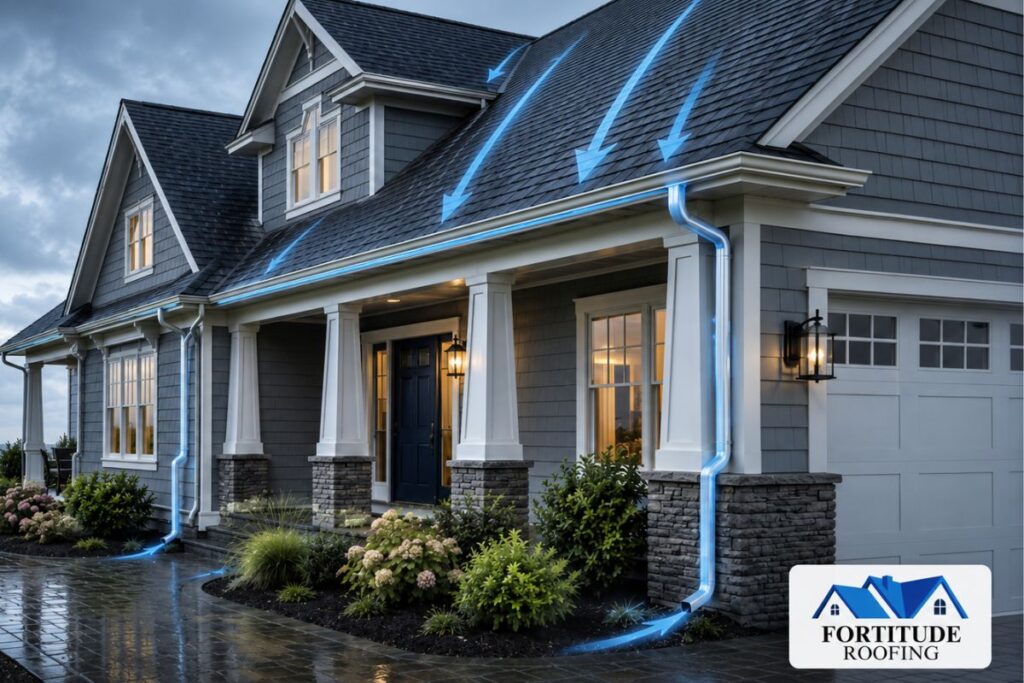
Why Gutters Are an Important Part of Your Roofing System
Most homeowners think about their roof as the main line of defense against rain, wind, and storms. That is true, but your roof does not protect your home by itself. A properly designed gutter system plays a critical role in moving water away from your roofline, siding, foundation, landscaping, and exterior structures.
Your roof sheds water. Your gutters control where that water goes.
When gutters are installed correctly and kept in good condition, they help protect your home from water damage, roof edge deterioration, foundation problems, crawlspace moisture, siding stains, landscape erosion, and costly exterior repairs. When gutters are missing, undersized, clogged, leaking, or pulling away from the fascia, rainwater can collect where it should not. Over time, that water can create damage that is far more expensive than the gutter system itself.
For homeowners in coastal North Carolina, gutters are especially important. Heavy rain, tropical weather, wind-driven storms, pine needles, oak leaves, and humid conditions all put extra stress on a home’s drainage system. A well-built roof and gutter system helps your home handle that water with control.
How Gutters Work With Your Roof
A roofing system is designed to move water down and off the structure. Shingles, metal panels, underlayment, flashing, drip edge, valleys, and roof pitch all work together to direct water toward the roof edges. Once that water reaches the edge of the roof, the gutter system takes over.
A properly functioning gutter system collects water as it runs off the roof, channels it through the gutter trough, moves it into downspouts, and discharges it away from the home.
The basic process looks like this:
- Rainwater lands on the roof.
- The roof surface sheds water toward the eaves and valleys.
- Drip edge helps guide water off the roof edge.
- Gutters collect the water before it falls directly beside the home.
- Downspouts carry the water down to ground level.
- Extensions or drainage systems move the water away from the foundation.
When every part works correctly, water moves in a controlled path. When one part fails, water can back up, overflow, or drain into areas that were not designed to handle constant moisture.
The Main Benefits of a Proper Gutter System
1. Gutters Help Protect Your Roof Edges
The edges of your roof are vulnerable areas. Fascia boards, soffits, rafter tails, drip edge, and the lower rows of shingles can all be affected when water is not managed correctly.
Without gutters, water runs directly off the roof and repeatedly splashes against the home. With clogged or failing gutters, water can overflow backward or sit against the fascia. Over time, this can contribute to wood rot, peeling paint, soft fascia, soffit damage, and roofline deterioration.
A proper gutter system helps move water away from these areas before it can cause long-term damage.
2. Gutters Reduce the Risk of Foundation Problems
One of the most important jobs of a gutter system is moving water away from the foundation. When rainwater falls directly beside the home, it can saturate the soil around the foundation. Over time, that can contribute to soil movement, drainage problems, cracks, crawlspace moisture, and water intrusion.
This is especially important in areas that experience heavy rain. A roof can collect a large amount of water during a storm. If that water is dumped directly beside the foundation, the ground around the home takes the full impact.
Gutters and downspouts help control that water and direct it away from the structure.
3. Gutters Help Prevent Crawlspace Moisture
Many homes in coastal North Carolina have crawlspaces. Poor roof drainage can create standing water or damp soil around the home, which increases the risk of moisture entering the crawlspace.
Crawlspace moisture can lead to musty odors, insulation damage, wood deterioration, pest activity, and indoor air quality concerns. While gutters are not the only factor in crawlspace protection, they are one of the first lines of defense.
A well-designed gutter system helps reduce the amount of water collecting around the perimeter of the home.
4. Gutters Protect Siding, Windows, and Doors
When rainwater pours off the roof without control, it can splash against siding, trim, windows, doors, and exterior walls. Over time, this can cause staining, mildew growth, paint damage, and wood rot.
This is especially common below roof valleys, upper rooflines, dormers, and areas where large amounts of water concentrate during heavy rain.
Gutters help collect that water and move it away from vertical surfaces, reducing the amount of moisture exposure on your home’s exterior.
5. Gutters Help Preserve Landscaping and Hardscapes
Uncontrolled roof runoff can damage landscaping beds, wash away mulch, erode soil, flood flower beds, and create trenches below roof edges. It can also splash dirt onto siding and walkways.
For homeowners who have invested in landscaping, patios, driveways, walkways, or outdoor living spaces, gutters help protect that investment by reducing uncontrolled water flow.
A good gutter system does not just protect the house. It protects the property around it.
6. Gutters Help Prevent Water From Entering the Home
Roof leaks are not always caused by missing shingles or storm damage. Sometimes, water enters a home because it is not draining properly.
Clogged gutters, improper slope, poor downspout placement, damaged fascia, or missing drip edge can allow water to collect near vulnerable areas. When water sits or backs up, it can find openings around the roof edge, siding transitions, windows, and trim.
Proper roof drainage reduces the amount of water exposure in these weak points.
Common Signs Your Gutters Are Not Working Properly
Homeowners should watch for signs that the gutter system is no longer doing its job. Problems often start small, but they rarely fix themselves.
Common warning signs include:
- Water overflowing from the gutters during rain
- Gutters pulling away from the fascia
- Sagging or uneven gutter sections
- Visible leaks at seams or corners
- Water stains on siding or fascia
- Soil erosion below the roofline
- Mulch or landscaping washed out after storms
- Standing water near the foundation
- Peeling paint or soft wood near the roof edge
- Mold, mildew, or algae growth on exterior surfaces
- Downspouts discharging too close to the home
- Gutters full of leaves, pine needles, or roof granules
If you see these issues, your home may need gutter repair, gutter cleaning, gutter replacement, or a more complete drainage solution.
Why Gutter Size and Placement Matter
Not all gutter systems perform the same. The right gutter system depends on the home’s roof size, roof pitch, roof valleys, layout, water volume, fascia condition, and drainage needs.
A roof with steep slopes or large drainage areas may require larger gutters or additional downspouts. Roof valleys often move more water than a straight roof edge. If the gutter is too small or the downspouts are poorly placed, the system can overflow even if it is clean.
Proper installation matters. Gutters need the correct slope, secure fastening, properly sealed joints, effective downspout placement, and discharge points that move water away from the home.
A gutter system should be designed around how the roof actually drains.
Seamless Gutters vs. Sectional Gutters
Many homeowners choose seamless gutters because they reduce the number of joints along the gutter run. Fewer seams usually means fewer common leak points.
Sectional gutters are assembled from shorter pieces, which creates more connection points. Over time, those joints can separate, leak, or collect debris. Seamless gutters are custom-formed to fit the home and are commonly used for a cleaner appearance and improved long-term performance.
The best choice depends on the home, budget, roofline, and drainage requirements. For most homeowners looking for a durable and professional gutter solution, seamless gutters are often the stronger option.
Do Gutters Help Extend the Life of a Roof?
Gutters do not replace the need for a quality roof, but they can help protect the parts of the roofing system most exposed to water runoff.
When gutters are functioning properly, they help reduce repeated water exposure at the roof edge, fascia, soffit, siding, and foundation. That matters because many exterior problems start where water is allowed to sit, splash, overflow, or drain in the wrong place.
A roof protects the top of the home. Gutters protect the edges and perimeter. Together, they form a more complete water management system.
Gutters Are Especially Important in Coastal North Carolina
Homes in coastal North Carolina face a demanding environment. Heavy rain, hurricane season, tropical storms, salty air, humidity, trees, and wind-driven debris can all affect roofing and gutter systems.
In communities across Carteret County, Craven County, Onslow County, Pender County, Brunswick County, and New Hanover County, proper drainage is not optional. Homeowners need roofing and gutter systems that can handle real weather conditions.
A strong gutter system helps protect homes in areas such as Morehead City, Beaufort, Emerald Isle, Atlantic Beach, New Bern, Jacksonville, Swansboro, Hampstead, Surf City, Wilmington, Leland, Southport, Oak Island, Shallotte, and surrounding coastal communities.
When Should a Homeowner Consider New Gutters?
You may need new gutters if your current system is leaking, sagging, rusting, overflowing, undersized, or pulling away from the home. You should also consider gutters when replacing your roof, repairing fascia, improving drainage, or correcting water problems around the foundation.
A roof replacement is often the right time to evaluate the gutter system. If the existing gutters are damaged, improperly installed, or not sized correctly, installing a new roof without addressing drainage may leave part of the problem unresolved.
A professional roof and gutter inspection can determine whether the existing system should be cleaned, repaired, replaced, or redesigned.
Gutter Maintenance Matters
Even a high-quality gutter system needs maintenance. Leaves, pine needles, roof granules, sticks, and debris can block water flow. Once gutters clog, water can overflow, back up, or place unnecessary weight on the system.
Homeowners should keep gutters clear and confirm that downspouts are draining properly. In heavily wooded areas, gutter guards may help reduce debris buildup, but they do not eliminate the need for inspection.
Routine maintenance helps gutters do the job they were installed to do: move water away from the home.
Frequently Asked Questions About Gutters and Roof Protection
Are gutters part of the roofing system?
Gutters are not the roof itself, but they are an important part of the home’s water management system. The roof sheds water, and the gutters collect and redirect that water away from the home.
Can bad gutters cause roof damage?
Yes. Clogged, leaking, or improperly installed gutters can contribute to fascia rot, soffit damage, roof edge problems, and water intrusion near vulnerable areas of the home.
Do all homes need gutters?
Most homes benefit from gutters, especially in areas with heavy rainfall, crawlspaces, landscaping, foundation concerns, or rooflines that discharge water near walkways, entries, siding, or exterior walls.
How do I know if my gutters are the right size?
A professional can evaluate your roof size, pitch, valleys, water flow, and downspout placement to determine whether your gutters are properly sized for the home.
Should gutters be replaced when replacing a roof?
Not always, but they should be inspected. If gutters are damaged, leaking, undersized, or attached to rotted fascia, it may be smart to replace or repair them during the roofing project.
How often should gutters be cleaned?
It depends on the trees and debris around the home. Many homes need gutter cleaning at least once or twice per year. Homes near pine trees or heavy tree cover may need more frequent service.
Protect Your Home With a Proper Roof and Gutter System
Your gutter system is more than an accessory. It is a critical part of protecting your home from water damage.
A properly installed gutter system helps move rainwater away from your roof edge, siding, foundation, crawlspace, landscaping, and exterior surfaces. When gutters fail, water goes where it should not. When gutters work correctly, your home is better protected.
Fortitude Roofing provides professional roofing and gutter services for homeowners across coastal North Carolina. If your gutters are leaking, overflowing, sagging, or not protecting your home properly, our team can inspect your system and recommend the right solution.
Need gutter service or a roof and gutter inspection? Contact Fortitude Roofing today to protect your home with a drainage system built for coastal North Carolina weather.