Roof Replacement in Eastern North Carolina (2026): A Coastal Homeowner’s Complete Guide
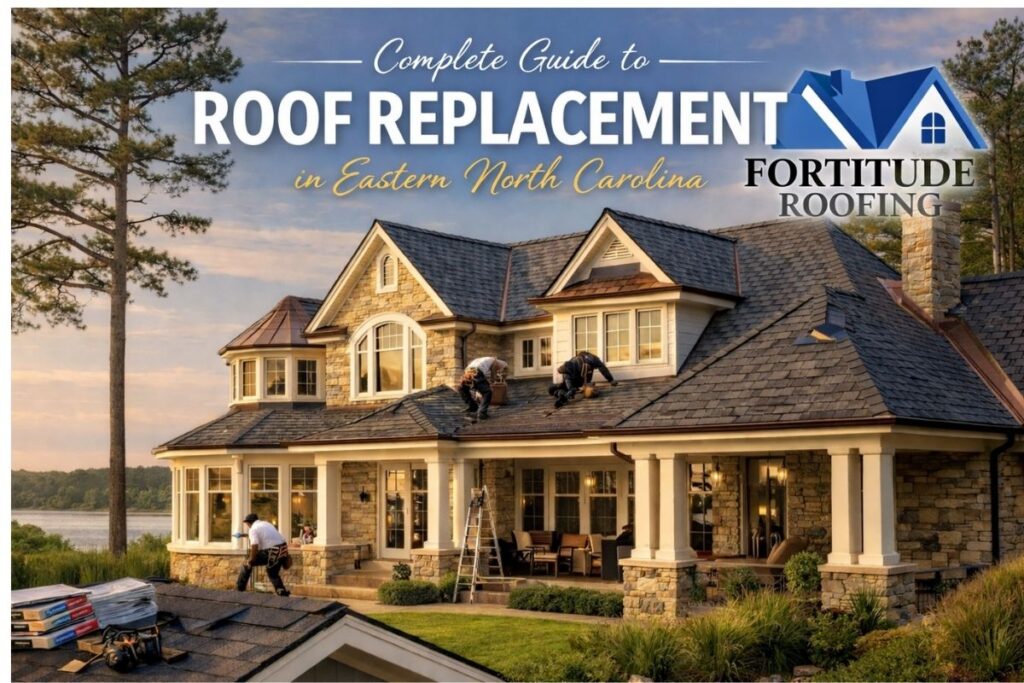
Roof Replacement in Eastern North Carolina (2026): A Coastal Homeowner’s Complete Guide
Roof replacement in Eastern North Carolina is not a routine home improvement. It is a risk-management decision driven by coastal wind events, wind-driven rain, salt exposure, humidity, and intense UV. A roof that “looks fine” can still be one storm cycle away from a predictable failure if the edges, flashings, valleys, and penetrations were not designed and installed for this market.
If you own a home in Carteret, Craven, Onslow, Pender, Brunswick, or New Hanover County, this guide explains what matters most: repair vs. replacement, the step-by-step replacement process, materials that perform here, what drives cost, and what to require from your contractor.
Quick Answer: What a Roof Replacement in Eastern NC Should Include
In Eastern North Carolina, a high-quality roof replacement should be built for high wind, wind-driven rain, humidity, salt exposure, and local code requirements. In most cases, that means a full tear-off, a defined decking plan, upgraded underlayment/water barriers, correct flashing and transition details, wind-rated fastening patterns, corrosion-aware components, and photo-documented installation.
If your contractor cannot describe these elements clearly in writing, you are not comparing apples to apples.
Who This Guide Is For
This guide is for homeowners who:
- care about durability and predictability, not the lowest bid
- want clear expectations and documentation—not sales pressure
- expect professional communication and clean job sites
- plan to protect a high-value asset in a storm-exposed region
Why Roof Replacement Is Different in Coastal and Eastern North Carolina
Roof systems in Eastern NC operate in harsher conditions than most inland markets:
- Wind and storms: edges, corners, ridges, and flashings are repeatedly stress-tested
- Wind-driven rain: leaks often begin at transitions—not at “missing shingles”
- Salt air and humidity: accelerate corrosion and material wear near the coast
- Intense sun and heat: speed aging of shingles, sealants, and underlayment
- Permits, inspections, and insurance processes: require code awareness and documentation
Practical implication: material selection matters, but system design and installation discipline matter more.
Do You Need a Roof Replacement or a Repair?
Start with a professional inspection. In Eastern NC, the right question is not “can it be patched,” but whether the roof system is still predictable through the next storm cycles.
Signs You Likely Need a Roof Replacement
Replacement is often warranted when you see:
- multiple missing, buckled, curling, or slipping shingles
- widespread granule loss (often visible in gutters/downspouts)
- daylight visible through roof decking from the attic
- recurrent leaks after prior repairs
- soft spots, sagging, rot, or compromised decking
- persistent flashing failure at chimneys, vents, walls, skylights, or valleys
- roof age beyond expected service life (especially with frequent storm exposure)
- widespread wind or hail damage across multiple slopes after a storm
When a Repair Might Be Appropriate
A targeted repair can be appropriate if the issue is isolated—a small area of wind damage, one flashing failure, or a localized defect—and the rest of the roof is performing consistently.
When Replacement Is the Prudent Choice
If damage is systemic, recurring, or distributed across multiple slopes, replacement is often the more cost-controlled decision because it removes uncertainty—not just symptoms.
Roof Replacement Process in Eastern North Carolina (Step by Step)
A professional roof replacement should feel like a managed project, not a mystery. Here is what disciplined execution looks like.
1) Inspection and Evaluation (With Documentation)
A proper evaluation includes:
- exterior assessment of slopes, edges, ridges, and penetrations
- attic review for ventilation, moisture signs, and decking condition
- inspection of flashing, transitions, and prior repairs
- photo documentation (especially when storm damage is suspected)
Deliverable you should require: a written, itemized scope—not a vague total price.
2) Permits and HOA Coordination (If Applicable)
In many Eastern NC communities, administration matters:
- permit requirements and inspections
- HOA submissions (approved colors, profiles, product specs)
- scheduling aligned with community rules
A quality contractor handles this proactively.
3) Insurance Coordination (If Storm Damage Is Suspected)
The process should remain factual:
- construction observations and photo documentation
- clear line-item scope when requested
- scope clarification tied to installation requirements and observed conditions
Important: insurers determine coverage. Contractors should document conditions and build correctly.
4) Tear-Off vs Re-Roof (Overlay)
In Eastern NC, full tear-off is usually the superior approach.
Full tear-off (recommended):
- exposes hidden decking issues
- enables correct underlayment strategy and flashing resets
- reduces layered failure points and improves long-term performance
Overlay (limited use cases):
Overlay can shorten lifespan and reduce performance in storm-exposed regions. It is generally a compromise unless conditions and code clearly support it.
5) Deck Repair and Preparation (Where Low Bids Hide Risk)
The substrate determines roof stability.
- compromised decking is replaced
- surface is flattened and secured
- drip edge and ventilation components are planned as a system
Watch for vague language like “decking as needed” without a clear plan.
6) Underlayment and Water Protection (Built for Wind-Driven Rain)
Eastern NC roofs should assume wind-driven rain will occur. A high-performance assembly typically includes:
- upgraded synthetic underlayment strategy
- water barriers at eaves, valleys, and vulnerable transitions
- disciplined sealing at penetrations and edges
This step is a major determinant of leak resistance.
7) Flashing and Detail Work (Where Roofs Usually Fail)
Most long-term leaks begin at details—not field shingles or panels.
Critical zones:
- step flashing at walls
- chimneys (including crickets/saddles where needed)
- valleys
- pipe boots and vents
- roof-to-siding or roof-to-masonry transitions
A roof is only as strong as these details.
8) Roofing Installation (Shingle or Metal)
Installation should follow manufacturer requirements and coastal exposure realities:
- correct fastening patterns (wind-rated approach)
- ridge/hip strategy built for storm cycles
- clean terminations at edges, rakes, and eaves
- corrosion-aware component choices near the coast
For metal systems: seam strategy, clip spacing, termination details, and penetration flashing are non-negotiable.
9) Cleanup and Final Inspection
A professional project ends clean:
- daily debris control
- magnet sweeps and nail pickup
- final walkthrough and closeout
- photo documentation and warranty package delivery
Typical timelines:
Shingle roofs often complete faster than metal; roof complexity, decking repairs, and weather windows control schedule.
Roofing Materials That Perform in Eastern North Carolina
Architectural Asphalt Shingles
Best for: most homes in Eastern NC
Strengths: strong value, broad aesthetics, repairable
Watch-outs: performance depends on system execution—underlayment, flashing, edges, and ventilation
Standing Seam Metal Roofing
Best for: coastal homes, long-term ownership, higher exposure zones
Strengths: durability, water management, storm resilience, low maintenance
Watch-outs: higher upfront investment; requires correct coastal specification and specialized detailing
Low-Slope Roofing (TPO / EPDM)
Used for porches, garages, and low-slope sections when installed as complete manufacturer systems.
Ventilation and Insulation
Proper intake/exhaust ventilation extends roof life and reduces heat and moisture buildup—two major lifespan killers in Eastern NC.
What Drives Roof Replacement Cost in Eastern North Carolina?
Roof cost is driven by scope, not just material.
Primary cost variables include:
- roof size, pitch, and complexity
- tear-off vs overlay and decking repairs
- material selection and system tier
- wind-ready detailing and specialty flashing scope
- permits, disposal fees, access/logistics
- warranty structure and installation standard
Best practice: evaluate bids on scope and system design—not the headline price.
Warranties and Ongoing Maintenance in a Storm-Exposed Region
Warranty Types
- Manufacturer warranty: covers material defects
- Workmanship warranty: provided by the contractor
- Extended coverage: may require defined methods and documentation
Maintenance Expectations
Coastal roofs are not “set and forget.” Annual inspection and prompt repairs protect:
- performance and longevity
- warranty defensibility
- storm readiness before the next season
Choosing a Roofing Contractor in Eastern NC: What to Require
A contractor’s process is as important as the product.
Verify the Essentials
- recent local references (not just reviews)
- licensing and insurance
- written, itemized proposal with materials + details
- documented installation method (not vague “per code”)
- clear project management and communication plan
- permit and HOA ownership where applicable
- photo documentation and closeout packet
Avoid Predictable Problems
- storm chasers with minimal local accountability
- volume installers who sell speed and price over details
- vague scopes and allowances that hide real cost
FAQ: Roof Replacement in Eastern North Carolina
How long does a roof replacement take?
Many shingle roofs can be completed quickly, but timelines vary with roof complexity, decking repairs, and weather windows. Metal systems generally take longer due to fabrication and detailing.
Will insurance pay for a new roof?
Coverage depends on the policy and cause of loss. Contractors can document observable conditions and provide construction scope; insurers determine coverage.
Metal or shingles—what’s better for Eastern NC?
Standing seam metal is often best for long-horizon ownership and higher exposure zones. Premium shingle systems can perform very well at a lower upfront investment when installed correctly as a complete system.
Should I insist on a tear-off in coastal North Carolina?
In most cases, yes. Tear-off exposes decking issues, enables proper underlayment and flashing resets, and reduces layered failure points—especially in wind-driven rain regions.
How should I budget for roof replacement?
Budget for the full system: tear-off, disposal, decking plan, underlayment, flashing, ventilation, materials, permits, warranties, and closeout documentation.
What to Expect From Fortitude Roofing
Fortitude Roofing is built for homeowners who value professionalism and accountable outcomes:
- system-based recommendations aligned to exposure and ownership horizon
- disciplined installation standards and detail work
- permit/HOA coordination
- clean job sites and documented closeouts
Homeowner Checklist: Next Actions
- schedule a documented inspection
- gather insurance information if storm damage is suspected
- request a written, itemized proposal
- confirm permits, HOA approvals, warranties, and documentation
- plan landscaping/property protection for the project window
Ready to Start?
If you’re planning a roof replacement in Eastern North Carolina and want a roof system designed for coastal wind, wind-driven rain, and salt exposure, schedule an inspection with Fortitude Roofing.
We proudly serve Carteret County (Atlantic Beach, Beaufort, Emerald Isle, Indian Beach, Morehead City, Newport, Cape Carteret), Craven County (New Bern, Trentwoods), Onslow County (Swansboro, Jacksonville, Surf City, North Topsail Beach), Pender County (Hampstead, Topsail Beach, Burgaw), Brunswick County (Leland, Shallotte, Southport, Oak Island, Ocean Isle Beach, Holden Beach, Sunset Beach, Calabash, Bolivia), and New Hanover County (Wilmington, Wrightsville Beach, Carolina Beach, Kure Beach).
The right roof starts with the right process.