Snow Melt Roof Leaks in Wilmington, NC: What Homeowners Need to Check After a Winter Storm
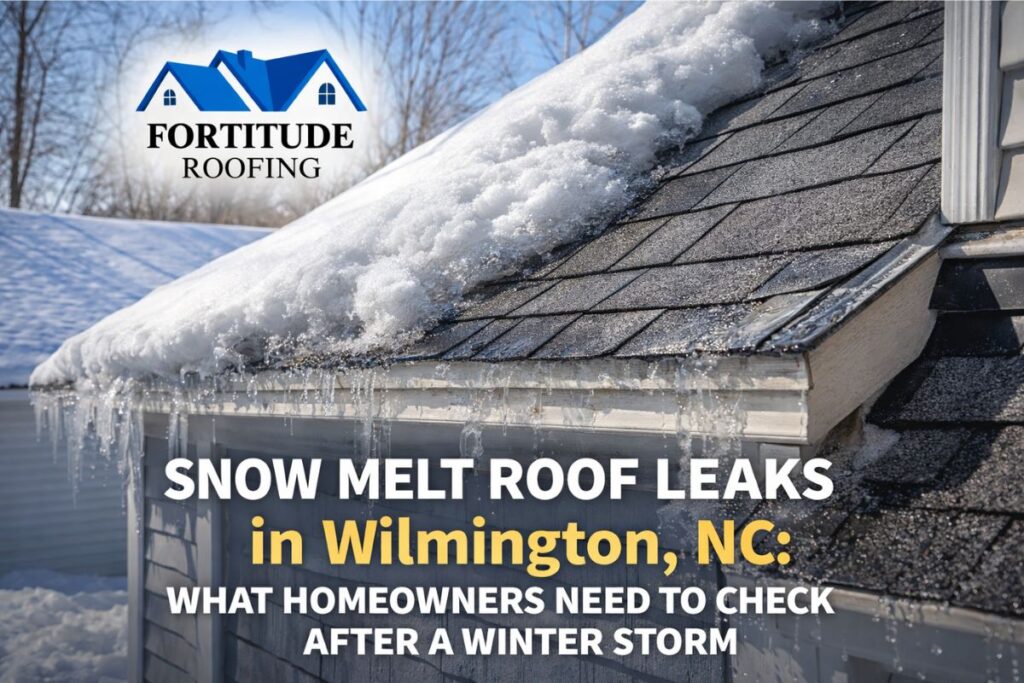
Snow Melt Roof Leaks in Wilmington, NC: What Homeowners Need to Check After a Winter Storm
Wilmington, North Carolina recently experienced a rare snowstorm — and for many homeowners, the highest risk of roof leaks begins after the snow melts, not during the storm itself.
While the roof detail shown in the accompanying video is from a Wilmington home, the same snow-melt leak risks apply across coastal North Carolina, including New Hanover, Brunswick, Pender, Onslow, and Carteret counties.
This article explains why snow melt causes roof leaks in Wilmington and coastal NC, where problems most often occur, and what homeowners should inspect as temperatures rise.
Why Snow Melt Causes Roof Leaks in Wilmington and Coastal North Carolina
Homes in Wilmington and along the North Carolina coast are primarily designed for wind, rain, and hurricanes — not prolonged snow accumulation.
When snow sits on a roof and temperatures fluctuate:
- Snow melts during warmer daytime hours
- Water flows toward roof transitions and vertical walls
- Overnight refreezing forces water underneath roofing materials
This freeze–thaw cycle is what creates leaks, even on roofs that appear otherwise sound.
Because snow events are uncommon in coastal NC, roofing systems are rarely stressed this way — making weaknesses more likely to show up after melting begins.
The Most Common Snow Melt Leak Point: Dormers and Step Flashing
One of the most frequent sources of snow-melt roof leaks in Wilmington is the dormer wall-to-roof transition.
At these locations, roofs rely on step flashing to direct water safely away from the structure. When snow melts:
- Water can slide underneath step flashing
- Ice buildup can lift shingles and flashing slightly
- Meltwater is pushed into the roof system instead of draining outward
Once water gets behind the flashing, it can enter wall cavities and ceilings, often without immediate visible signs.
Why Roof Leaks Often Appear Days After the Snow Is Gone
Many Wilmington and coastal NC homeowners are surprised when roof leaks appear two to five days after a snowstorm, rather than during the storm itself.
This delay happens because:
- Snow initially insulates the roof surface
- Damage occurs gradually during repeated melt–refreeze cycles
- Water migrates before becoming visible inside the home
By the time ceiling stains or damp drywall appear, water intrusion may have already caused hidden damage.
What Wilmington Homeowners Should Inspect After Snow Melts
If snow sat on your roof, inspect — or have inspected — the following areas as temperatures rise:
- Dormers and wall-to-roof intersections
- Step flashing along vertical walls
- Shingles that appear lifted or shifted
- Interior ceilings near exterior walls
- Attic spaces for moisture, staining, or damp insulation
Early identification can prevent costly interior repairs, insulation damage, and mold growth.
Does This Apply to Other Coastal North Carolina Homes?
Yes. Although this example comes from Wilmington, homes throughout coastal North Carolina face the same snow-melt risks.
Communities in:
- New Hanover County
- Brunswick County
- Pender County
- Onslow County
- Carteret County
share similar roof designs, materials, and exposure. When snow melts after a rare winter storm, dormers and flashing details are often the first areas to fail across the entire coastal region.
Do You Need a Roof Inspection After a Snowstorm in Wilmington?
If you’re unsure what you’re seeing — or don’t feel comfortable inspecting these areas yourself — a professional roof inspection after snow melt can help identify problems early.
In Wilmington and coastal NC, post-storm inspections are especially important because:
- Small flashing failures can lead to significant interior damage
- Salt air and wind accelerate material wear
- Snow events place unusual stress on roofing systems
Addressing issues early is significantly less expensive than repairing interior water damage later.
Frequently Asked Questions
Can snow cause roof leaks in North Carolina?
Yes. Snow melt combined with freeze–thaw cycles can force water underneath shingles and flashing, causing leaks days after the storm ends.
Where do roof leaks usually start after snow melts?
Dormers, step flashing, and wall-to-roof transitions are the most common failure points.
How long after snow melts do roof leaks appear?
Most roof leaks appear 2–5 days after the snow melts, not during the storm itself.
Does this affect homes outside Wilmington?
Yes. Any home along the North Carolina coast with dormers or wall-to-roof transitions can experience snow-melt roof leaks after winter storms.
Should I inspect my roof after a snowstorm?
Yes. Post-snow inspections help catch hidden issues early and reduce the risk of interior water damage.
Final Takeaway for Wilmington and Coastal NC Homeowners
If your roof had snow sitting on it — even briefly — the most important inspection window is right now.
Snow melt exposes weaknesses that normal rain often does not. Dormers and flashing details are common failure points, and leaks frequently appear after the storm has passed.
Knowing what to look for — and acting early — can prevent expensive repairs and long-term damage.
Watch this video to see a real-world example of a dormer roof detail that becomes a leak waiting to happen when snow melts.