Why Underlayment Matters in Metal Roofing for Coastal North Carolina Homeowners
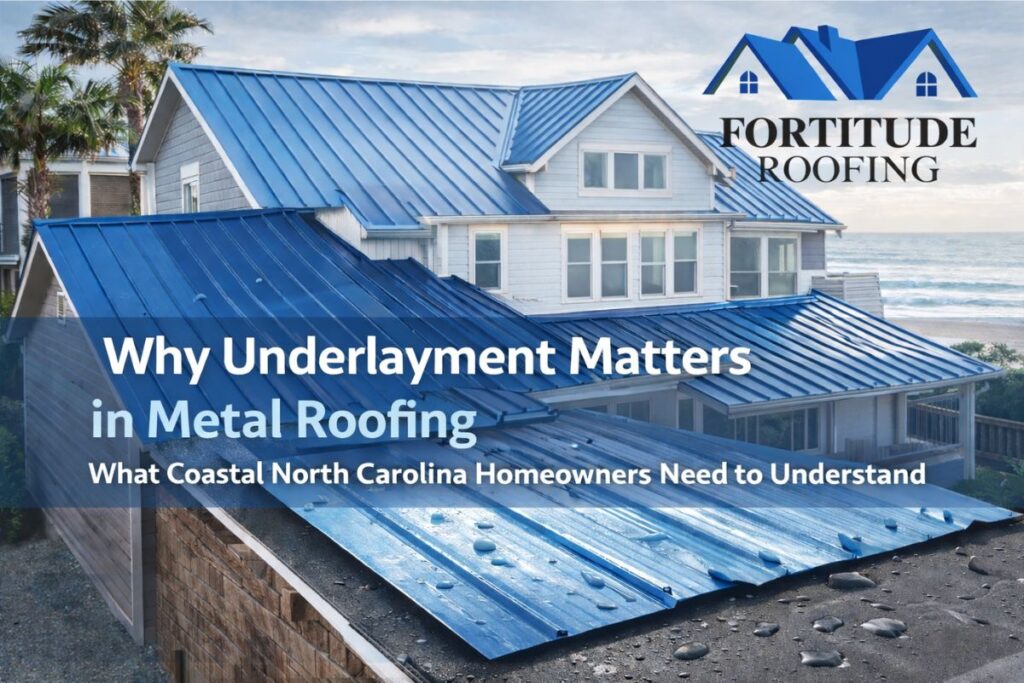
Why Underlayment Matters in Metal Roofing for Coastal North Carolina Homeowners
Many metal roofing problems don’t start with the panels—they start beneath them.
In coastal North Carolina, metal roofing systems are exposed to wind-driven rain, high heat, humidity, and constant thermal movement. The underlayment is the layer that manages these forces. When it is underspecified, incomplete, or improperly installed, failures can occur even when the metal panels remain intact.
Quick Summary:
In coastal North Carolina, underlayment is a primary performance layer beneath metal roofs. It manages wind-driven rain, heat, humidity, and thermal movement. High-temperature underlayment systems are often required. When underlayment is inadequate, metal roofs can fail even if panels appear undamaged.
Why Metal Panels Aren’t the Whole System
Metal panels are designed to shed water—but they are not waterproof on their own. Seams, fasteners, and penetrations all present potential water pathways.
Underlayment acts as:
- The secondary water barrier
- Protection during wind-driven rain events
- A buffer against heat and condensation
Treating underlayment as optional or “standard” undermines system performance.
Underlayment’s Role in Coastal Conditions
Wind-Driven Rain Protection
Coastal storms push water laterally. Underlayment must remain intact and adhered to prevent water intrusion beneath the panels.
Heat and High-Temperature Resistance
Metal roofing absorbs and transfers heat. High-temperature underlayments are necessary to:
- Maintain adhesion
- Prevent premature breakdown
- Withstand prolonged exposure under metal panels
Moisture and Humidity Management
Humidity and condensation are common under metal roofs. Proper underlayment helps manage moisture migration and reduces the risk of trapped water.
Thermal Movement Accommodation
Metal expands and contracts daily. Underlayment must tolerate movement without tearing, wrinkling, or losing adhesion.
Common Underlayment-Related Failures
In coastal NC, underlayment issues often lead to:
- Leaks at seams and penetrations
- Moisture trapped against decking
- Adhesive failure under heat
- Early system degradation despite intact panels
These problems are difficult to diagnose without inspection because the panels conceal the source.
Why High-Temperature Underlayment Is Often Required
Standard underlayments may be acceptable under shingles but fail beneath metal. High-temperature systems are designed to:
- Resist heat softening
- Maintain bond strength
- Perform under prolonged metal panel exposure
Skipping this upgrade increases long-term risk.
Metal Roofing as a Complete System
A durable metal roof depends on:
- Proper panel selection
- Correct fastening strategy
- Compatible flashing and accessories
- Appropriate underlayment selection and installation
Panels alone do not determine performance.
Metal Roof Inspections Near You
Homeowners in Wilmington, Leland, Morehead City, New Bern, Jacksonville, and surrounding coastal communities should understand that underlayment quality directly affects roof lifespan.
Evaluating what’s beneath the panels is critical when diagnosing issues or planning replacement.
Frequently Asked Questions
Can a metal roof leak if the panels are intact?
Yes. Leaks often originate from underlayment failure rather than panel damage.
Why does metal roofing require special underlayment?
Metal roofs generate high heat and movement, requiring underlayments designed for elevated temperatures and flexibility.
Is underlayment more important near the coast?
Yes. Wind-driven rain, humidity, and storm exposure increase reliance on underlayment performance.
How do I know if my underlayment is failing?
Signs include unexplained leaks, moisture staining, or condensation issues. Professional inspection is required to confirm.
Can underlayment be repaired without replacing panels?
In some cases, targeted repairs are possible, but access limitations often make full system evaluation necessary.
A professional roof inspection can help determine whether a metal roofing system is properly protected beneath the panels.